



Microcure Intelligent Insufflator: Empowering Minimally Invasive Surgery for Colorectal Cancer, Reshaping Surgical Precision and Patient Experience
In 2022, there were 517,100 new cases and 240,000 deaths from colorectal cancer in China, ranking second in new cancer cases and fourth in cancer deaths[2]. Among them, rectal cancer accounted for 57.6%, and nearly 90% were middle and low rectal cancer[4]. "Radical tumor resection, anal preservation, and improvement of postoperative quality of life" have become the core demands of rectal cancer treatment[1]. The implementation effect of mainstream minimally invasive surgical procedures such as taTME and NOSES-PPS directly depends on the performance support of pneumoperitoneum equipment. Relying on targeted technological breakthroughs, the Microcure Intelligent Insufflator accurately addresses the pain points of minimally invasive treatment for rectal cancer and has become a core equipment to improve surgical quality.
I. Main Surgical Methods for Rectal Cancer: Comprehensive Upgrade from Classic Radical Resection to Precise Anal Preservation
1. Classic Radical Resection: Laying a Solid Foundation for Treatment
• Miles' operation (abdominoperineal resection): Applicable to ultra-low rectal cancer with a distance <2cm from the dentate line and invasion of the anal sphincter[1], a permanent colostomy is required. Although it has a strong radical effect, it seriously affects the patient's quality of life[3], promoting the clinical transformation to minimally invasive anal-preserving surgical procedures. 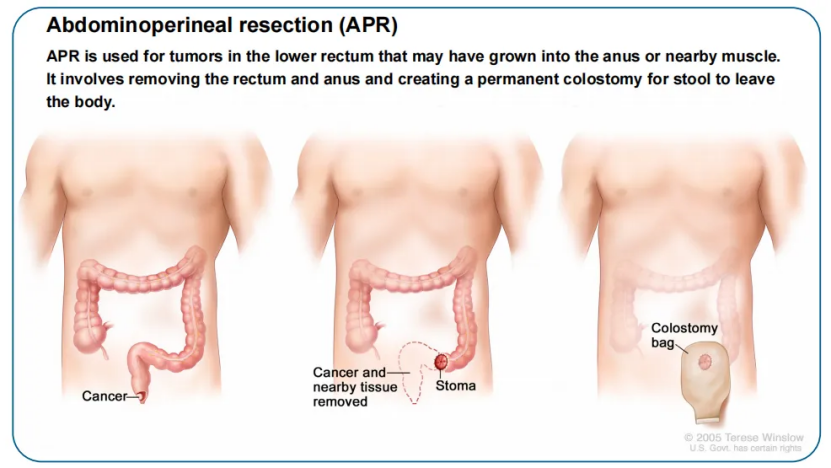
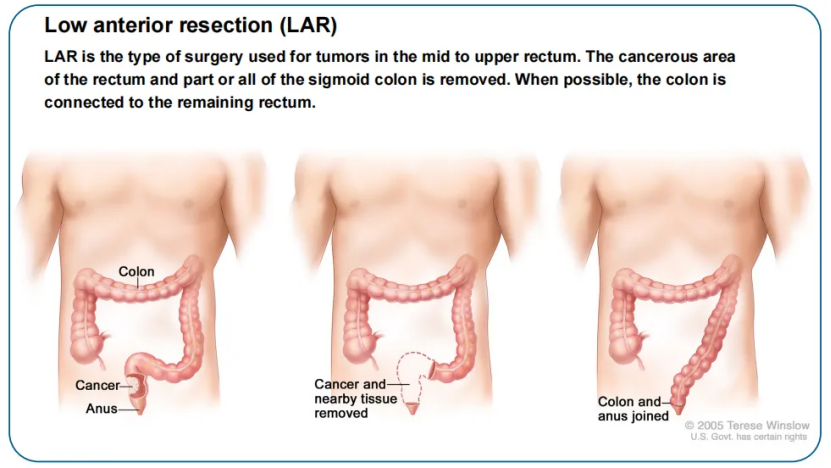
• Dixon's operation (low anterior resection): Targeting rectal cancer more than 5cm from the anal verge, it can preserve anal function[1]. However, the radicality of ultra-low tumor resection is insufficient[4], which needs to be compensated by precise minimally invasive technology, and pneumoperitoneum stability is a key prerequisite.
2. Modern Minimally Invasive Surgical Procedures: Both Precision and Function Excellence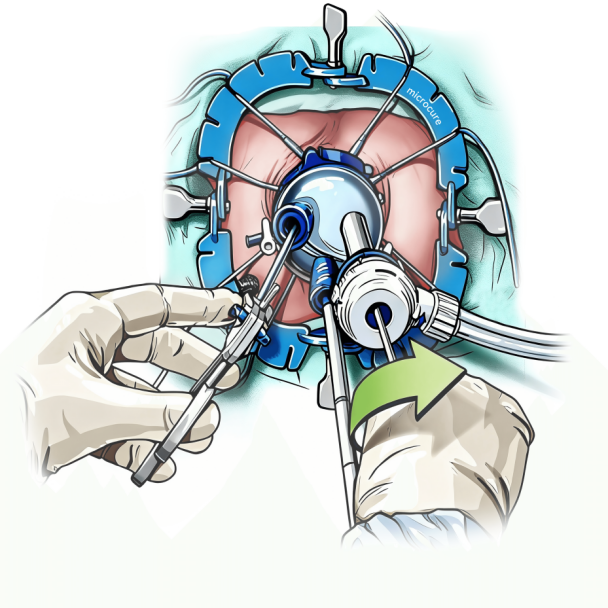
• TME (Total Mesorectal Excision): As the "gold standard" for radical treatment of middle and low rectal cancer[1], it requires precise separation of the mesentery in a narrow pelvic cavity, with prominent problems of limited field of vision and operating space[5]. Stable pneumoperitoneum is the core foundation to ensure separation accuracy and reduce recurrence rate.
• taTME (Transanal Total Mesorectal Excision): Suitable for complex cases such as obesity and pelvic stenosis, with an anal function preservation rate of 85%[1]. However, pressure fluctuations in the narrow pelvic cavity are prone to cause visual field shaking and smoke obscuring the surgical space[5], which directly restricts surgical safety and precision.
• ISR (Intersphincteric Resection): It can preserve anal function to the maximum extent[1]. However, the intersphincteric plane is delicate and the space is narrow, requiring a clear field of vision and a stable operating environment. Otherwise, it is easy to damage the sphincter and cause postoperative dysfunction[1].
• TAE (Transanal Local Excision): A minimally invasive surgical procedure for early rectal cancer[5]. The operating space in the rectal cavity is limited, and smoke and pressure fluctuations will affect the judgment of the incisional margin and increase the risk of tumor residue[5].
• NOSES-PPS (Natural Orifice Specimen Extraction-Precision Preserving Sphincter): The preferred minimally invasive surgical procedure for ultra-low rectal cancer with anal preservation[3]. There is no abdominal incision and no preventive ostomy, but the anal operating channel is narrow. Excessively high pressure is easy to damage the perianal tissue, and excessively low pressure cannot maintain the operating space. Smoke will also block the direct visual field[3], which places extremely high requirements on pneumoperitoneum equipment.
II. Microcure Intelligent Insufflator: Four Core Advantages to Accurately Address Surgical Pain Points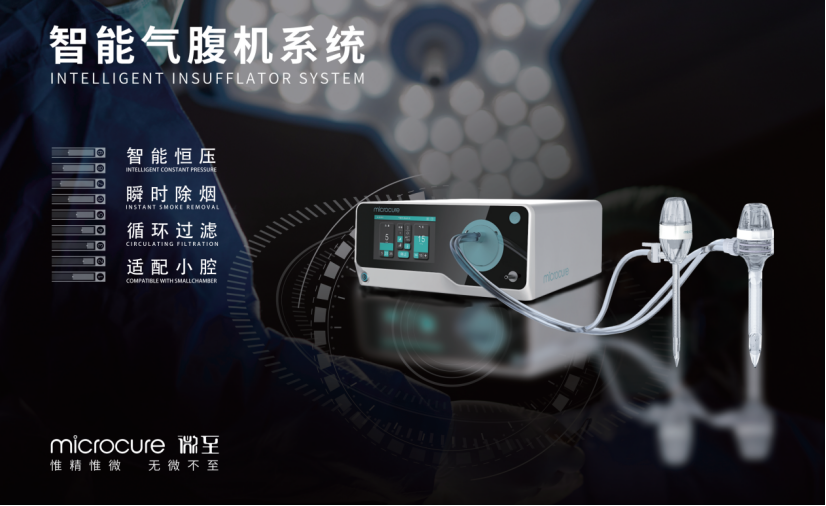 Minimally invasive surgical procedures for rectal cancer generally face three major pain points: "narrow space, easily disturbed visual field, and stringent pressure control requirements"[5], which directly affect surgical precision, safety and patient prognosis. With four core advantages, the Microcure Intelligent Insufflator constructs an exclusive pneumoperitoneum solution for rectal cancer and has become a clinically necessary equipment:
1. Intelligent Constant Pressure: Adapting to Narrow Space and Avoiding Safety Risks
The operating space of minimally invasive rectal cancer surgery is only a few centimeters in most cases. Pressure fluctuations are prone to cause tissue displacement and visual field shaking, and may also lead to complications such as subcutaneous emphysema and carbon dioxide embolism[5]. The Microcure Insufflator is built with an independent pressure measurement channel and a high-speed constant pressure algorithm, which can respond to sudden situations such as air leakage and tissue damage within 1 second[1], and continuously maintain a stable environment of low flow and low abdominal pressure. It not only avoids the damage of high pressure to perianal and pelvic tissues, but also prevents the collapse of the operating space caused by low pressure, providing a safe and stable operating foundation for surgical procedures such as taTME and NOSES-PPS, and reducing the risk of complications from the source.
2. Instant Smoke Removal: Clearing Visual Field Obstacles and Ensuring Resection Precision
Smoke generated by the operation of electrosurgical knives and ultrasonic knives is the core obstacle that blocks the rectal mesenteric space and tumor boundary[5]. Especially in delicate operations such as TAE and ISR, a blurred visual field is easy to lead to insufficient incisional margin or normal tissue damage, which directly affects the radical effect and anal function preservation[1]. With a high smoke exhaust rate of 17L/min and multi-level filter elements, the Microcure Insufflator intercepts more than 99.99% of harmful particles above 8nm[1], exhausts smoke in real time without frequent stopping to wipe the endoscope, ensuring that doctors can clearly identify key structures such as the intersphincteric plane and rectal mesenteric fascia, accurately control the resection range, and provide core guarantee for the success of anal-preserving surgery.
3. Circulating Filtration: Gas Saving and Staff Protection, Optimizing Surgical Process
The operation process of minimally invasive rectal cancer surgery is complex and time-consuming. The one-time gas use mode of traditional insufflators not only consumes a huge amount of gas, but also the direct smoke exhaust endangers the health of medical staff[1]. The Microcure Insufflator innovatively realizes gas circulation filtration and reuse, and the purified gas is reinjected into the abdominal cavity, reducing carbon dioxide consumption by more than 50%[1], and avoiding the diffusion of harmful particles. More importantly, the circulating gas can maintain stable abdominal pressure continuously, eliminate the operation interruption caused by frequent air supplement, ensure the coherent progress of key steps such as NOSES-PPS intestinal anastomosis and taTME complete mesenteric resection, and improve surgical efficiency and stability.
Aiming at the small cavity characteristics of ultra-low anal preservation surgery for rectal cancer, the Microcure Insufflator is exclusively optimized with a low-flow adaptation mode[1], achieving a trinity effect of "low pressure stability, high-efficiency smoke removal and precise adaptation" in the anal operating channel or narrow pelvic cavity that only fits a fingertip. Its performance is recommended by the transanal approach guidelines[1], and it can perfectly adapt to all types of minimally invasive rectal cancer surgical procedures from classic laparoscopy to NOSES-PPS and taTME. It helps doctors complete precise resection and anastomosis in the extreme space 1-3cm from the anal verge, allowing more patients who originally only received ostomy surgery to preserve anal function, and truly realizing the treatment goal of "balancing radical cure and quality of life"[3].
III. Empowering Clinical Practice with Technology, Win-Win Future with Services
At present, the proportion of laparoscopic surgery for colorectal cancer in China exceeds 80%[4], and precise anal-preserving surgical procedures such as taTME and NOSES-PPS are gradually popularized[3][5]. The performance of pneumoperitoneum equipment has become the core competitiveness of medical institutions to improve the diagnosis and treatment level of colorectal cancer. Oriented to the pain points of rectal cancer treatment, the Microcure Intelligent Insufflator builds differentiated value with four core advantages, and at the same time provides a full range of services such as gradient pricing, five-year maintenance and clinical on-site guidance[1], helping medical institutions quickly implement high-quality minimally invasive diagnosis and treatment solutions.
References
[1] 欧阳喜, 毛盛勋. 低位直肠癌保肛治疗策略及思考[J]. 临床外科杂志, 2024, 32(5): 460-462.
[2] Han B, Zheng R, Zeng H, et al. Cancer incidence and mortality in China, 2022[J]. Journal of the National Cancer Center, 2024, 4(1): 47-53.
[3] 中国医师协会结直肠肿瘤专业委员会, 中国抗癌协会大肠癌专业委员会, 中国NOSES研究协作组. 经自然腔道取标本之超低位直肠癌精准功能保肛(NOSES-PPS)手术操作标准(2024版)[J]. 中华胃肠外科杂志, 2024, 27(11): 1100-1106.
[4] 姚宏伟, 李心翔, 崔龙, 等. 中国结直肠癌手术病例登记数据库2022年度报告:一项全国性登记研究[J]. 中国实用外科杂志, 2023, 43(1): 93-98.
[5] 中国医师协会外科医师分会经肛腔镜外科专家工作组. 中国经肛腔镜手术专家共识及操作指南(2023版)[J]. 中华胃肠外科杂志, 2023, 26(8): 729-739.